2026-11-08 ·
Termite Signs in Granite Bay Homes and What a Treatment Involves
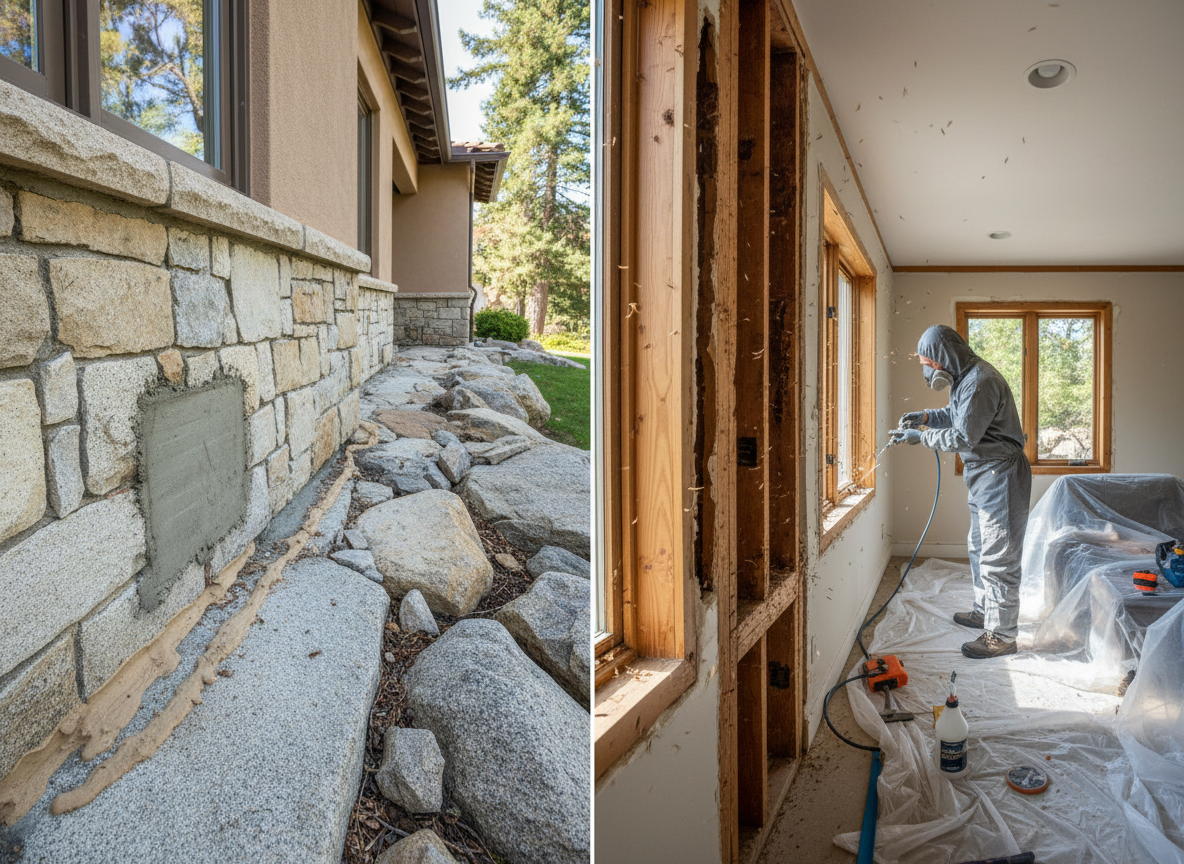
Two termites cause most of the damage in Granite Bay homes. Western subterranean termites live in the soil and travel up into wood through mud tubes. Western drywood termites live inside the wood itself and never need to touch the ground. Each leaves different signs, and each is treated a different way. Knowing which one you have is the first step.
Signs of subterranean termites
- Mud tubes about the width of a pencil on the foundation, piers, garage slab edge or inside walls.
- Swarms of small winged insects on a warm day after the first fall or spring rains, often near windows or lights.
- Piles of shed wings on windowsills, in spider webs or near doors.
- Wood that sounds hollow when tapped, or paint that bubbles or sags.
Subterranean termites need moisture. In Granite Bay that often means sprinklers that soak the foundation, wood decks or fence posts set in the soil, firewood stacked against the house, or planters built up against the siding.
Signs of drywood termites
- Small, hard pellets about the size of a grain of rice, piled below trim, window frames or attic framing.
- Tiny round holes in wood where the pellets are pushed out.
- Swarms in late summer or early fall, often from attic vents or eaves.
- Blistered or uneven paint on trim and eaves.
What a treatment involves
Treatment starts with an inspection. In California, the inspector follows Structural Pest Control Board rules and writes a report. Findings are usually split into Section 1, active termites or damage, and Section 2, conditions likely to lead to them. The report lists the treatment and the price.
For subterranean termites, the technician treats the soil. That usually means a liquid termiticide applied in a trench along the foundation and around piers in the crawl space. Under slabs and patios, it may mean drilling small holes to reach the soil. Bait stations around the house are another choice. Termites feed on the bait and carry it back to the colony, and the stations are checked on a schedule.
For drywood termites, the treatment goes where they live. Small, reachable areas can be spot treated by drilling into the wood and injecting product. When drywood termites are spread through walls and the attic, the house may need whole-house fumigation under a tent. That means the family and pets leave for a few days, and food and medicine are bagged or removed.
What it costs
Angi lists termite treatment at $70 to $1,725 based on 2024 data, with spot work at the low end. HomeYou lists $912 to $2,196 as a typical range for a whole-home job. Damage repair is separate, and Angi lists it from $1,000 to $10,000 or more. Large Granite Bay homes with crawl spaces and long foundations tend to land higher. See how much pest control costs in Granite Bay for other jobs.
When to call
Call for a termite inspection when you see mud tubes, wings after a warm rain or pellets below wood. Many owners also book one every year or two, or before buying or selling a home. The termite control and treatment plan is written up and priced before any work starts.